"How much do bass lessons cost?" is one of the first questions almost every new student asks me, and it's a fair one. Some people ask it as "how much are bass lessons" or "what do bass teachers charge," and the answer is the same either way. Private bass lessons typically run $30–$100 per hour in the US, with most experienced one-on-one instructors landing in the $50–$75 range. Online subscription platforms and group classes cost less but trade off personalization. Below I will walk through the real price landscape, what actually drives the numbers, how my own rates sit in that picture, and a few questions I'd ask any teacher before sending them money.
What you're actually paying for
Before we get to ranges, it helps to know what changes between options. A private one-on-one teacher is building a plan around your ears, your hands, and your goals. A video subscription is a fixed library aimed at the average beginner. A marketplace platform is a booking tool sitting between you and a pool of teachers whose experience varies a lot. Those are very different products, even though each one calls itself "bass lessons."
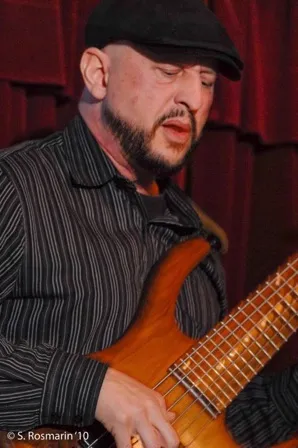
I've been teaching professionally since 1985, and the thing I can do that a video library cannot is watch what your hands are doing this week and adjust to it. That is what the hourly rate buys you, and honestly it is the part of teaching I enjoy the most!!
Typical price ranges
This is roughly the landscape right now. Treat these as approximate ranges, because individual teachers and platforms move around inside them.
| Lesson type | Typical price | Pros | Cons |
|---|---|---|---|
| Private local instructor (in-person) | $30–$100/hour | Real-time feedback, tailored to you | Travel time, limited to teachers near you |
| Private online instructor (Zoom) | $40–$80/hour | Same personalization, worldwide choice of teacher | Needs a decent camera/mic setup |
| Marketplace platforms (Preply, Lessonface, TakeLessons) | $20–$60/hour | Easy to browse, lots of teachers | Quality varies, and you are vetting the teacher yourself |
| Video subscription (BassBuzz, Scott's Bass Lessons, Fender Play, TrueFire) | ~$15–$30/month or ~$100–$300/year | Cheap, self-paced, big libraries | No feedback on what you play, so bad habits go unnoticed |
| Group classes at a music store | $20–$40 per class (30–45 min) | Cheap, social | Pace is set by the group, not you |
| College/university extension courses | $150–$400 per semester | Structured curriculum, real teacher | Term-based, not always bass-specific |
A couple of notes on reading that table. The "private local" range is wide because it covers everything from a high-school senior giving beginner lessons out of their bedroom to a working pro with decades on the road. The middle of that range ($50 to $75) is where most serious private instructors actually sit. Online private lessons tend to be slightly tighter because the market is bigger and students can compare teachers more easily.
What drives the price
A few things move the number up or down in a predictable way.
Instructor experience. Someone who has been gigging and teaching for thirty or forty years is almost always going to charge more than someone who started teaching last year, and usually it is worth it. An experienced teacher spots problems faster and fixes them sooner, which means fewer hours of lessons to get where you want to go.
Lesson length. Hourly rates are the norm for private teachers. Some teachers offer 30-minute slots for younger kids or very early beginners, which lowers the per-lesson price but not the per-hour rate. Longer sessions (90 minutes, 2 hours) are great for intermediate and advanced students who can absorb more in one sitting.
Online vs local. Online private lessons are generally comparable to local rates, sometimes a bit less because the teacher is not paying for a studio space. The much cheaper options (video subscriptions, marketplaces) are cheaper because they give you less personal attention, not because they have found a magic way to deliver the same product for less money.
Prepaid packs and regular schedules. Most private teachers, myself included, offer a small discount if you prepay for a block of lessons. It is a reasonable trade, the teacher gets a committed student, the student gets a better rate.
How my rates compare
I keep my pricing straightforward. Lessons are $55 per hour. If you prepay 4 or more hours up front, the rate drops to $50 per hour. Lessons are available in 1-hour or 2-hour sessions, and a 2-hour lesson bills as two hours, so four prepaid hours might be four 1-hour lessons or two 2-hour lessons, whichever fits your schedule.
On scheduling, there are three ways I work with students.
- Weekly. A 1- or 2-hour lesson every week. Best for students building steady momentum.
- Biweekly. Every other week. Works well if you want more time to absorb material between lessons.
- Floater. You contact me when you're ready. Good for busy students or students working through a specific question.
Payment is Venmo, Zelle, or PayPal, due by the day of the scheduled lesson. There are no refunds, but any paid lesson can be made up within four weeks of the original time.
If you line that up against the table above, $55 per hour (or $50 per hour with a pack) lands below the middle of the private one-on-one online range, while the teaching side of it is 40+ years of professional playing and instruction. A subscription course will always beat me on price. What I am selling is personalized coaching from somebody who has been doing this a long time and still loves doing it!!
Questions to ask before signing up for lessons
Price is only half the picture. Before you commit to any teacher or platform, I'd ask:
- What's the teacher's actual playing and teaching background? Years gigging, styles played, years teaching. Anyone offering private lessons should be able to tell you this quickly.
- How are lessons structured? Is there a plan, or is it "show up and we'll figure it out"? Both can work, but you should know which one you are paying for.
- Do they teach the style you want to play? Rock, funk, jazz, Latin, R&B, worship music. Not every teacher covers everything, and that's fine, so make sure the overlap is there.
- What happens if you miss a lesson? Make-up policy, cancellation notice, refund policy. Get it in writing (or in an email).
- How do payments work? Per lesson, prepaid pack, subscription? When is it due? What methods are accepted?
- Do they give you things to practice between lessons? A good teacher should leave you with clear homework, not just a vague "keep working on that."
- For video subscriptions specifically. Is anyone actually going to watch you play? If the answer is no, you are buying a curriculum, and you should price it that way when you compare.
If a teacher's rate is at the high end of the range, the answers to those questions should justify it. If the rate is unusually low, the answers tell you whether it is a good deal or a warning sign.
The short version
Private bass lessons run roughly $30–$100 per hour, with experienced online and local teachers clustered around $50–$75. Video subscriptions cost less, but nobody on the other end is listening to what you actually play, and the marketplace platforms are a mixed bag where you end up doing the vetting yourself. Packs and regular schedules usually shave a few dollars off the hourly rate. Pick the option that matches what you actually want (a curriculum, feedback on your playing, or both) and ask enough questions up front to know what you are buying.
If you want a sense of what I actually cover in lessons, posts like anatomy of an exercise and always practice the way you're going to play show some of the thinking, and what I teach lays out the full set of fundamentals (technique, reading, ear training, harmony, line construction, soloing, and groove). For the full details on my rates and packs, see the pricing page. For personalized coaching, online bass lessons via Zoom are available.