Russ RodgersBass Guitar Instruction

Questions about lessons?

Call Russor send an email

Beginner

First steps on bass, core fundamentals, and how to start out the right way.

23 posts

  1. Are Bass Lessons Worth It? An Honest Answer

    • Choosing Lessons
    • Beginner
    • 6 min read

    Bass lessons aren't worth it for everyone. If you're not practicing yet, or you self-direct well with free material, save your money. If you're stuck, can't hear your own timing, or keep practicing without getting better, an hour with a teacher is usually the cheapest fix. I wrote this to help you tell which one you are.
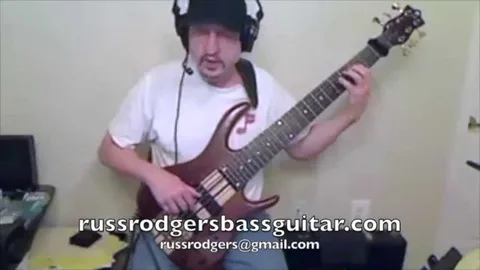
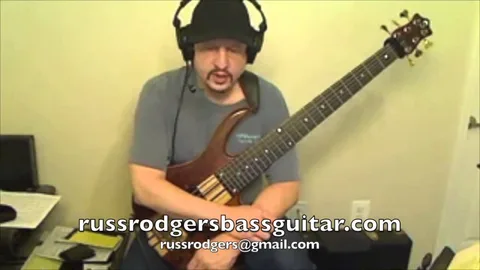
  2. How Long Does It Take to Learn Bass Guitar? A Timeline by Goal

    • Choosing Lessons
    • Beginner
    • 6 min read

    Weeks to play simple songs along with a record. Months to hold down the groove with other people. Years to gig comfortably and read charts. Consistency moves that timeline far more than talent or hours logged in one sitting.

  3. Switching from Guitar to Bass: What Carries Over

    • Practice & Mindset
    • Beginner
    • 5 min read

    Switching from guitar to bass, most of your fingerboard knowledge, chord knowledge, and ear carry straight over. What does not carry over is the job itself. Bass supports the song and locks with the drums instead of fronting it, and that shift in role is the real work.

  4. Too Old to Learn Bass? What 40 Years of Teaching Says

    • Choosing Lessons
    • Beginner
    • 6 min read

    No, you're not too old to learn bass. I've been teaching since 1985, and adult beginners see real progress in their first few months. What changes with age isn't your ability to learn. It's pacing, practice time, and how the instrument fits your hands. This is the honest version, including the hard parts.

  5. 4-String vs. 5-String vs. 6-String Bass: Where to Start

    • Choosing Lessons
    • Beginner
    • 8 min read

    For most beginners I would point you at a 4-string, because it is the standard, it is the cheapest way in, and it has the narrowest neck. 5-strings fit jazz, gospel, metal, or modern worship. Most players come to a 6-string later on, once the fundamentals are already under their hands.

  6. Bass Lessons for Kids, Teens and Adults: How I Teach Each Age

    • Choosing Lessons
    • Beginner
    • 8 min read

    I teach bass online to students from about age 8 through retirement. The fundamentals are the same at every age; what I change is lesson pacing, practice time, the size of the bass, and the music we start with.

  7. How Much Do Bass Lessons Cost? Typically $30–$100/Hour

    • Choosing Lessons
    • Beginner
    • 7 min read

    Private bass lessons run $30–$100/hour, with experienced teachers clustered around $50–$75. Video subscriptions are cheaper but impersonal. My rate is $55/hr, or $50/hr when you prepay 4 or more hours.

  8. Online vs. In-Person Bass Lessons: What's Different?

    • Choosing Lessons
    • Beginner
    • 7 min read

    Online bass lessons via Zoom deliver the same one-on-one instruction as in-person, with three real differences. Audio setup requires a small mixer and headphones to avoid echo, camera angle becomes an asset because the teacher sees your hands up close, and you can study with the right instructor from anywhere in the world.

  9. Self-Taught vs. Bass Lessons: Honest Trade-offs

    • Choosing Lessons
    • Beginner
    • 8 min read

    Self-teaching on bass works, and plenty of great players got there that way. Lessons mostly exist to fix what self-learners tend to miss, things like technique blind spots, practice habits, and ear training.

  10. What Is Groove? Why Bass Players Own It

    • Practice & Mindset
    • Beginner
    • 5 min read

    Groove is the physical reaction people have to music, the feeling that makes them want to move. Creating it is the bass player's prime directive. In Western pop, beats one and three are the rhythmic strong beats, but two and four are what people feel. Get that two-and-four pocket inside you with your voice first, then let it through the bass.

  11. Bass Triads: Why They Matter More Than Scales

    • Theory & Harmony
    • Beginner
    • 5 min read

    Triads are the basis of every bass line, covering chord structure, harmony, and the notes you choose. I used to teach scales first, and I have come to see that triads are the real key, with scale notes as ways to connect them.

  12. Left Hand Form

    • Technique
    • Beginner
    • 2 min read

    I look at technique as simply the process of getting the music you hear in your head out through your hands onto the instrument. You only need enough technique to play what you hear. In this lesson I walk through the left-hand default position, the most relaxed place your hand can sit, and how to practice from there.

  13. Efficient Left Hand Positioning

    • Technique
    • Beginner
    • 2 min read

    Fast, complex bass playing comes down to efficient left-hand motion. Outside of a few stretches in the lower positions, the hand should move the same way playing fast as it does playing slow. Practice the line slowly out of time, weed out excess movement, then put it in time, and you'll like what you end up with.

  14. Practicing The Way You're Going To Play

    • Practice & Mindset
    • Beginner
    • 1 min read

    A very important part of bass practice that is often overlooked is how you hold the instrument. Whatever strap height and posture you use on stage, match it in the practice room. The more consistent your position is between practice and performance, the faster muscle memory locks in and the more reliable your playing becomes.

  15. An Introduction To Scales

    • Theory & Harmony
    • Beginner
    • 1 min read

    I look at music as a language, and notes as its alphabet. Scales are how musicians organize that information so they can catalog their harmonic choices. In chord-scale theory it's a match game, and the notes you choose come from the scale that fits the chord. Knowing every note of a scale across the fingerboard matters, not just a couple of pattern shapes.

  16. Note Reading Preparation

    • Repertoire & Reading
    • Beginner
    • 1 min read

    Developing note reading on the bass works best when broken into three areas, note names on the neck (without hesitation), written range (matching a note on the staff to its location on the neck), and counting and playing rhythms. A strong reader controls all three well enough that the line still grooves and doesn't sound read.

  17. Reading Basics

    • Repertoire & Reading
    • Beginner
    • 1 min read

    I view reading music as a way to communicate on paper what you want somebody to play. It lets musicians prepare rehearsals and performances quickly, saves time and money, and opens up a wider variety of work that usually pays better. Getting your reading together will increase your worth as a bass player.

  18. Rhythm Reading Basics

    • Repertoire & Reading
    • Beginner
    • 1 min read

    Reading music on the bass breaks into three elements, knowing the note names across the fingerboard, identifying notes on the staff and their possible locations, and counting and playing rhythmic notation. A good reader controls all three well enough that the line being played still grooves and sounds like music instead of sounding like reading.

  19. Right Hand Form Choices

    • Technique
    • Beginner
    • 1 min read

    The quality of your bass playing comes down to the choices you make for your right- and left-hand technique. For right-hand form, I think the floating thumb used with a 2-, 3-, or 4-finger picking technique works the best, since one basic position keeps the hand relaxed across all strings while muting the lower strings you aren't playing.

  20. What Is Music???

    • Theory & Harmony
    • Beginner
    • 1 min read

    What is music? It's a language, a system of sound with its own vocabulary, grammar, and meaning, as Victor Wooten has shown many players. Treating music that way changes how you practice, because you're not memorizing notes, you're learning to say something. Far too many musicians still don't treat it that way.

  21. Anatomy Of An Exercise

    • Practice & Mindset
    • Beginner
    • 1 min read

    When working on a bass exercise, get the mechanics right (fingering, timing, coordination), but don't spend too much time on the exercise in isolation. Balance academic work with applying the exercise inside real music. At some point you need to trust that you know the alphabet and start talking.

  22. Feeling The Pulse

    • Practice & Mindset
    • Beginner
    • 1 min read

    Where you feel the pulse directly shapes how your playing feels. For 8th notes and 16th notes to sit correctly in 4/4 time, anchor your internal pulse on the quarter notes. Whether you're running harmonic exercises or laying down a groove, make sure you're solid on where the pulse is.

  23. Using A Pick

    • Technique
    • Beginner
    • 2 min read

    When it comes to picking technique, efficiency matters, and excess motion is wasted energy. When I started using a pick, I liked to rest the heel of my picking hand on the bass for support, but letting the hand float over the strings opens up faster, more flexible picking across multiple strings once the new form becomes comfortable.

Want bass lessons with Russ?

Online bass lessons via Zoom for students of any level. Reach out to talk through your goals.