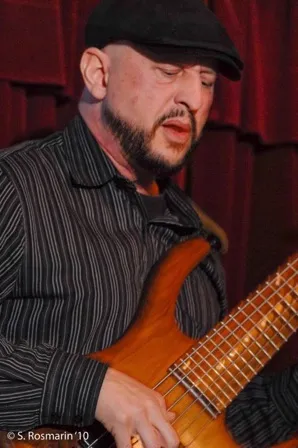
Slap bass playing is a technique on the bass, it is not really a style, and I think that is the first thing to get. The style that gets associated with it is funk more than any other, but you can play funk with a pick, you can play it with your fingers, any which way you come up with. Slap is one more way to get the notes out, with a percussive quality to it that has a lot in common with playing drums. The question is how to organize the right hand so that every motion earns its keep, and for me that comes down to letting the double-thumb angle be king, because once that angle is right your regular thumb, your pops, and your hand position all fall in line.
Where slap and funk get mixed up
Funk is the style people connect with slap more than any other, but funk does not require slap at all, and slap turns up in plenty of music that is not funk. What the technique really gives you is a percussive element, so a lot of what you play with it ends up being more rhythmic than harmonic, closer to what a drummer is doing than to a traditional bass line.
Once you look at it that way, the goal becomes efficiency and hand economy, the same as it is with fingerstyle. Everything does not have to be there to get the note out, and I like to weed out whatever is not doing a job, because all that extra motion is a waste of energy.
Everything works around the hand angle
Start with the thumb. I think of my thumb as a drumstick sticking out of my hand, keep it as straight as I can, and line it up with the string. The hand then moves across the strings in the direction the thumb is pointing, rather than rotating around it. If the arm moves the other way, you are not able to get the thumb in there for the up part of the double-thumb technique, and it is simply not going to work.
The other half of the setup is keeping the arm off the bass, letting the strap do all of the work so that your hands come off the instrument without anything shifting around. A good way to check is to play something and then take your hands off real quick, and if the instrument moves, you are using hand energy to hold it up. Resting the forearm on the body is a very comfortable thing to do, but it interferes with your mobility on the strings, and it puts pressure on the veins in there, which is why some people find their fingers going numb. If taking the arm all the way off feels like too much right now, then just reducing the pressure is a good idea. Expect your shoulder to get a little fatigued while you adapt, it takes some time to get used to, but it really pays off!
The regular thumb, the double thumb, and your tone
The regular thumb strike is just a flick of the wrist, almost like you throw your thumb into the string and let it bounce off. The thinner strings are harder to get a sound out of sometimes, so you might swipe them a little bit for more tone, but the motion itself stays small and fast.
The double thumb is simpler than it sounds, because you are basically using the tip of your thumb like a pick. That is what lets one down-up motion of the hand give you two notes, so you get more notes with less effort! There is really only one way to do it, since only one hand angle lets that upstroke happen, so I decided everything else had to work around it. My regular thumb and my pops both operate from that same position, and while the striking surface is smaller (right on the corner of the thumb), I never have to reset my hand in between techniques.
For tone, you want the click plus a good regular note balancing together, and that's what makes slap sound like slap. The place to shoot for is right around the end of the fingerboard. What I would not recommend is sitting right over the 12-fret harmonic, because that harmonic takes some of your low end away and the note thins out. Move a little bit past the fingerboard and the low fundamental comes back into the sound. The double thumb has more of a gristly, rattly character to it, easier to move around on but a different sound, and the goal is to combine the two of them so that they work together.
Popping without losing the thumb angle
The instinct when you pop is to rotate the hand so that the finger pulls the string the way it does when you play regularly. The problem with that is what it does to the thumb, because the thumb angle ends up pointing down instead of staying parallel with the strings, and the double-thumb upstroke is not available to you anymore.
Popping has to follow the same rule as everything else, and the double-thumb angle is king. That means popping on the top of the sides of the fingers rather than pulling with the pads. If you do this and you are not used to it, be real careful, because you can raise a blister in a matter of minutes. It is your finger versus a steel string, and the steel string is going to win, so ease into it.
Why it takes time to internalize
Once the angle is set, the combinations start stacking up fast. One down-up motion of the hand already gives you four notes, and if you add a hammer-on there are five, and once you put a pull-off in there the math gets pretty complex. Between the regular thumb, the down-up thumb, pop one, pop two, hammer-ons, and pull-offs, there is far more to coordinate than there is in fingerstyle, and that is one thing about the slap technique you have to realize going in.
That is why slap takes longer to internalize than most things, and you have to give yourself some time for it to adapt. The goal is to get your hands to where you do not have to think about any of it. I have always said music's a language and it really needs to be treated like one, and the instrument is like your vocal cords in that sense. When you talk to somebody, how much do you think about the way your mouth moves, or how a word is spelled? You don't, you just hear the idea and say it, and that is exactly the way you want the bass to be. Give yourself the hours, keep weeding out that excess motion, and one day you will notice your hands simply know where to go!!
Key takeaways
- Slap is one more way to get the notes out, with a percussive, drum-like quality to it.
- Let the double-thumb angle be king. Regular thumb, pops, and hand position all organize around it.
- Keep the arm off the bass and let the strap carry the weight, so that the hands stay free.
- Aim for click plus good regular note balance. Strike just past the fingerboard, not over the 12-fret harmonic.
- Slap takes time, because the combinations stack up quickly, and the goal is to get to where you are not thinking about them at all.
Slap technique lives in the fundamentals I teach. For the short-form version of the hand position that opens this post, see slap hand position. For more on how double thumb and regular thumb operate from the same angle, see more slap basics. If you'd like personalized feedback on your thumb angle, pops, and economy of motion, online bass lessons via Zoom are available.
Read the transcript
Slap bass playing is a technique on the bass. It's not really a style. I think that's the first thing to get — the style that's associated with it is funk more than any other, but it's really just a technique on the bass, because you can play funk with a pick, you can play it with your fingers, any which way you come up with. So it's not really a style. The technique itself is basically a lot like playing drums — there's a percussive aspect to it where it's rhythmic. A lot of it can be more rhythmic than harmonic.
Now what I do with my slap playing — and it's still a work in progress — is that I combine the newer techniques. Like, Victor Wooten came out with his stuff utilizing the double-thumb technique, and I wanted to have a technique on the instrument where I can incorporate everybody's stuff, rather than just the standard. Combine the double-thumb techniques, get all the speed happening with that.
Right now I'm really big on efficiency and hand economy. Everything doesn't have to be there to get the note out. I like to weed out, because I feel like it's a waste of energy. So I like to keep my hand in one position.
In researching this, I found there's really only one way to do the double thumb, because basically the double-thumb technique is simply using the tip of your thumb like a pick. It reduces the amount of down-up motion of the hand, so you get more notes with less effort. Since that's the only way to get the double thumb happening with this hand angle, I decided everything else had to work around it. My regular thumb, my pops, everything would work with this hand in this position. It's a little bit more difficult because I've reduced the surface area where I actually strike the string — it's right here on the corner of my thumb.
In your slap playing, basically you want two things in your sound. Getting a sound going is really important first. You want the click plus good regular note balance — those two elements, so that you have a good tone.
The first thing I recommend people work on is getting the hand form together. Where I start with this is that I think of my thumb as like a drumstick sticking out of my hand, and I keep that as straight as I can. Then I line that up with a string, so my hand moves this way.
I like to keep my arm off the bass. Just about any technique that I play, keeping my hands off the instrument, letting the strap do all the work, so that when I'm playing — even if it's slap stuff — my hands come off the instrument. Nothing's holding anything, the strap's doing everything. I'm not leaning against anything, which I feel is real important. It frees up the hands to do a lot of different stuff.
If you're playing and you let go of the instrument and it moves, then you're actually using hand energy to hold the instrument. Weeding that out — a good way to check is play something, then take your hands off real quick. If the instrument moves, you've got an issue with that. A lot of people like to rest their arm on the instrument — it's a very comfortable thing to do, to rest the weight of their arm there — but it interferes with mobility on the strings. More importantly, you're putting pressure on these veins, taking blood out of the hand. I've seen people play like this and wonder why their fingers are going numb. So keeping your arms off the instrument is a really good thing to do. It takes a little getting used to — if you've been doing it the other way, you'll find your shoulder getting fatigued pretty quickly, and it takes a little time to adapt to it. But it really pays off. If you don't want to take it all the way off, then just reduce the pressure is probably a good idea.
When I'm moving from string to string, I line up the joint of the thumb with the tip of the thumb — I move this way. The arm is moving this way, as opposed to letting it move that way, because the more you go that way, you're not able to get the thumb in there for the up part of the double-thumb technique. It's not going to work. The hand has to be down here.
When I do my regular thumb — getting back to just getting a good tone with a regular bounce thumb — it's just like a flick of the wrist. It's almost like you throw your thumb into the string and it bounces off. You find the thinner strings harder to get a sound out of sometimes — you might swipe it a little bit, get a little bit more tone on the thinner strings.
Probably right at the end of the fingerboard is a good place to shoot for. What I would not recommend is right over the 12-fret harmonic, because of that harmonic you lose some low end. Right over there you're getting kind of that happening. Listen to the difference — it thickens up as I move a little bit this way. A little bit of the low fundamental comes back into the sound. Just outside the fingerboard, if you have a two-octave neck, is a good place to do it.
You'll notice that the double thumb has more of a gristly sound to it, a lot of rattle going on, but it's easier to move around. You can get more notes with less effort. So I want to combine the regular thumb with the double thumb.
With popping — you would probably want to pop like you play regularly, with the same kind of finger angle that you go this way. The problem with that is, see what it does to the thumb? Now the thumb angle is pointing down, as opposed to being parallel with the strings. Again, I look at the double-thumb angle as being king here, and everything else follows that. So this is going to mean that I'm going to pop on the top of the sides of the fingers here.
If you do this and you're not used to it, be real careful, because you can raise a blister in a matter of minutes. You got the finger versus a steel string — the steel string is going to win. But I keep that same angle.
So I combine all those things together. Basically one down-up motion of the hand, I've got four notes. If I had a hammer-on, there's five. With a pull-off, you can — the math gets pretty complex. And that's one thing about the slap technique that you have to realize: it's going to take some time, because the mathematics are so much more complex. You have the regular thumb, the down-up thumb, pop one, pop two, hammer-ons, and pull-offs. To get your hands to where you don't have to think about it — because music's a language and it really needs to be treated like one, in the sense that the instrument is like your vocal cords. When you talk to somebody, how much do you think about the way your mouth moves, or any of this operates? When you talk, you don't. That's the way you want the bass to be.
For those of you who've experienced playing with the fingers, you don't have to really think about it. I'm just hearing and playing. I'm not really thinking about anything, any more than you think about how a word is spelled when you talk to somebody, or how your mouth is moving, or anything like that.
The point with the slap thing is you've got to give yourself some time for it to adapt. It's not going to come quickly, because there's so many things to internalize where you don't have to think — where you're actually hearing the ideas. My hands aren't really — I'm not thinking about how to do this. I've done it enough now to where it's starting to just — I hear, and my hands know where to go. And that's just a lot of hours. But reducing all this excess motion is going to be a real important part of it.