Russ RodgersBass Guitar Instruction

Questions about lessons?

Call Russor send an email

Technique

Left hand, right hand, slap, and tapping — the physical craft of playing bass guitar.

17 posts

  1. An Octave Slap Pattern for Bass

    • Technique
    • Intermediate
    • 5 min read

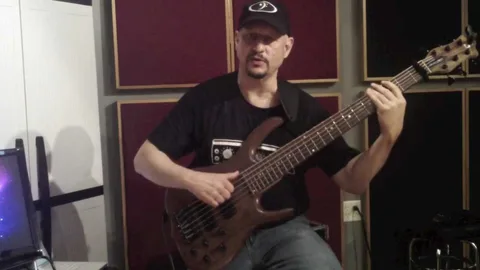
    The root-and-octave slap pattern is one of the most versatile building blocks in slap bass, showing up in funk, rock, pop, and fusion lines. This lesson sets up the right-hand thumb and pop, walks four octave pairs across the fingerboard, and covers the pressure release between notes that keeps both hands clean.
  2. Slap Bass Technique Fundamentals

    • Technique
    • Intermediate
    • 7 min read

    Slap is a technique rather than a style, and you can play funk with a pick or with your fingers just as well. Everything works around the double-thumb angle, and once you let that be king, your regular thumb, pops, and hand position all fall in line. In this lesson I set up the right hand for efficient slap playing.

  3. Right-Hand Form for 6-String Bass

    • Technique
    • Intermediate
    • 7 min read

    The 6-string bass adds a low B and a high C, which means two more strings ringing out while you're trying to play cleanly. Most of the noise problems on this instrument come down to right-hand form and thumb-muting habits. This lesson sets up the hand so the strings you aren't playing stay quiet.

  4. Right-Hand Form for 5-String Bass

    • Technique
    • Intermediate
    • 6 min read

    The extra string on a 5-string bass makes string noise your biggest enemy, and clean playing depends almost entirely on your right hand. This lesson sets up your thumb, finger mechanics, and left-hand damping so the strings you aren't playing stay quiet, with three exercises to drill the form on open strings.

  5. Left Hand Form

    • Technique
    • Beginner
    • 2 min read

    I look at technique as simply the process of getting the music you hear in your head out through your hands onto the instrument. You only need enough technique to play what you hear. In this lesson I walk through the left-hand default position, the most relaxed place your hand can sit, and how to practice from there.

  6. Left Hand String To String Movement In One Fret

    • Technique
    • Intermediate
    • 1 min read

    Moving the left hand from string to string inside a single fret is a common bass-line challenge, and it's easier to play when the hand has been preconditioned for it. Short, targeted exercises at the same fret train the muscle memory. Then plug those patterns into grooves so the motion becomes musical instead of mechanical.

  7. Smart Right Hand Fingering

    • Technique
    • Intermediate
    • 1 min read

    The quality of your bass playing on fast, complex material comes down to how efficiently your right (plucking) hand works. The goal is to move and deliver notes in the most relaxed, efficient way possible. Smart right-hand fingering is about finding that relaxed path, and knowing when to break the rules for a specific piece of music.

  8. Efficient Left Hand Positioning

    • Technique
    • Beginner
    • 2 min read

    Fast, complex bass playing comes down to efficient left-hand motion. Outside of a few stretches in the lower positions, the hand should move the same way playing fast as it does playing slow. Practice the line slowly out of time, weed out excess movement, then put it in time, and you'll like what you end up with.

  9. Open Strings vs. Fretted Notes on Bass

    • Technique
    • Intermediate
    • 1 min read

    Open strings and fretted notes are both fair game in a bass line. The only thing worth watching is that an open string's different attack and sustain doesn't break the flow of the phrase, and when the line moves quickly that difference usually disappears. Choose whichever option keeps your hands most relaxed in the moment.

  10. Smart Fingering Choices For The Left hand

    • Technique
    • Intermediate
    • 1 min read

    Fingering should end up being a series of natural, unconscious choices, and you shouldn't be thinking about it any more than you think about how your mouth moves when you talk. Getting there means practicing the way you plan to play. Keep your fingering, posture, and approach consistent between practice and performance so the muscle memory locks in faster.

  11. Two Handed Tapping Bassics

    • Technique
    • Advanced
    • 1 min read

    Two-handed tapping on bass guitar lets both hands articulate notes on the fingerboard, opening up solo bass arrangements the way players like Trip Wamsley and Darren Michaels have built careers on. Like any technique, it starts with physical conditioning, organizing the hands and building muscle memory for relaxed, independent motion before the musical ideas can follow.

  12. Right & Left Hand Fingering Choices For A Bass Line

    • Technique
    • Intermediate
    • 2 min read

    When building a bass line, your fingering choices shape groove, timing, and tone. A fingering that feels easier can hurt the line if it compromises the pulse, and a harder fingering on thicker strings often adds depth. In performance, I recommend sticking with whatever fingering you start a phrase with and saving the experimentation for the practice room.

  13. More Slap Basics

    • Technique
    • Intermediate
    • 1 min read

    Right-hand slap form on bass works best with one constant reference point, the double-thumb position. Because double-thumb requires the thumb at a specific angle to the string for a clean upstroke, building the standard thumb slap around that same angle minimizes excess motion, so switching between the two doesn't cost you anything.

  14. Right Hand Form Choices

    • Technique
    • Beginner
    • 1 min read

    The quality of your bass playing comes down to the choices you make for your right- and left-hand technique. For right-hand form, I think the floating thumb used with a 2-, 3-, or 4-finger picking technique works the best, since one basic position keeps the hand relaxed across all strings while muting the lower strings you aren't playing.

  15. Slap Hand Position

    • Technique
    • Intermediate
    • 1 min read

    Slap bass is one of the most physically demanding techniques on the instrument because both hands combine thumb slaps, pops, and muting in tightly coordinated ways. Building a reliable right-hand position is the first step, since the goal is for both hands to know what to do automatically as musical ideas arrive.

  16. Left Hand Muting When Using A Pick

    • Technique
    • Intermediate
    • 1 min read

    Keeping the strings you aren't playing quiet is one of the biggest technical challenges on an amplified bass. Sympathetic vibration through the instrument's body means unmuted strings will ring whenever another string sounds. Left-hand muting (resting unused fingers lightly across the other strings while you pick) is one of the most reliable ways to control that noise.

  17. Using A Pick

    • Technique
    • Beginner
    • 2 min read

    When it comes to picking technique, efficiency matters, and excess motion is wasted energy. When I started using a pick, I liked to rest the heel of my picking hand on the bass for support, but letting the hand float over the strings opens up faster, more flexible picking across multiple strings once the new form becomes comfortable.

Want bass lessons with Russ?

Online bass lessons via Zoom for students of any level. Reach out to talk through your goals.